
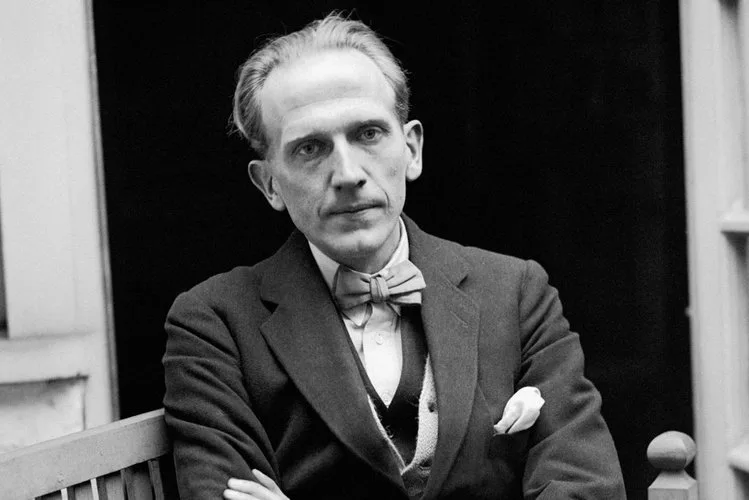
A. A. Milne—more formally known as Alan Alexander Milne—remains one of the most discreetly powerful scholarly figures of the twentieth century. Even though numerous readers instantly relate his title to the tender charm of “Winnie-the-Pooh”, his body of composition extends far beyond the Hundred Section of land Wood. Milne was not essentially an essayist of children’s stories; he was a writer, writer, writer, and humorist whose works reflect the tensions, mind, and social shifts of his period. To get the full scope of his scholarly bequest, one must see closely at his prose—particularly his novels—which uncover an essayist profoundly locked in with human nature, social desires, and the passionate consequence of war.
Milne’s books may not have received the same widespread recognition as his children’s stories; however, they played a fundamental role in shaping his identity as a genuine author. They, too, illuminate the pressures he experienced between open desire and individual desire. Whereas his later notoriety would rest heavily on the innocence and straightforwardness of childhood creativity, his books frequently explored adult concerns: thwarted expectations, character, moral integrity, and the search for meaning in a changing world.
Early Scholarly Formation
Before Alan Alexander Milne became known for children’s writing, he was already an established author. Taught at Cambridge, he contributed to and afterward altered the humor magazine “Granta”. His early work illustrated a sharp mind and a sharp observational eye, qualities that would characterize his compositions over the years. After college, he began composing for “Punch”, one of Britain’s leading satirical publications. This encounter sharpened his sense of timing, discourse, and irony—skills that would afterward enhance his novels.
Milne’s early exposition was marked by a light, humorous tone, but beneath the surface lay a keen engagement with social traditions. His writing examined the absurdities of neighborly society, delicately jabbing at rigid, inflexible structures, maintaining an essential sensitivity for his characters. This adjustment, a balance between humor and understanding, became a trademark of his style.
The Affect of War
To begin with, World War I significantly influenced Alan Alexander Milne, both personally and creatively. Having served as an officer in the British Armed Forces, he experienced firsthand the repulsions of trench fighting. Like numerous journalists of his era, he returned from the war with a sense of thwarted expectation and a craving to hook with its mental consequences.
This move is apparent in his post-war books, which regularly carry a more genuine and intelligent tone. The war constrained Milne to address questions about human nature, ethical values, and the delicacy of civilization. His composition began to move away from light parody toward deeper investigations of character and emotion.
“Mr. Pim Passes By” and the Comedy of Manners
One of Milne’s most outstanding early triumphs was “Mr. Pim Passes By”, a work that exists both as a novel and a play. Despite being frequently categorized as a comedy, it reveals Milne’s aptitude for building complex social circumstances. The story revolves around an apparently minor misconception that spirals into an emergency, uncovering the unbending ethical codes of Edwardian society.
In this work, Alan Alexander Milne demonstrates his ability to blend humor with unpretentious scholarship. The characters are not caricatures but completely realized people whose responses reflect their social conditioning. Through witty discourse and carefully created scenes, Milne analyzes the pressure between individual joy and societal expectations.
The novel’s enduring appeal lies in its inclusiveness. Whereas established in a particular authentic setting, its themes—miscommunication, ethical inflexibility, and the fear of scandal—remain significant. Milne’s composition captures these elements with clarity and exactness, making the story both engaging and thought-provoking.
“The Ruddy House Mystery”: A Takeoff into Analyst Fiction
Perhaps the most celebrated of Milne’s books for grown-up readers is “The Ruddy House Puzzle”, a detective story that has earned a place in the history of crime fiction. Distributed in 1922, it reflects Milne’s interest in the traditions of the sort, while moreover displaying his particular voice.
Unlike numerous analyst books of its time, *The Ruddy House Secret* is less concerned with complex plotting than with character and climate. The story unfurls in a country house setting, where a killing disrupts the tranquility of an end-of-week gathering. The beginner criminologist, Anthony Gillingham, approaches the case with a blend of interest and charm, guided as much by instinct as by logic.
Alan Alexander Milne’s approach to the analysis sort is outstanding for its availability. He dodges the thick details that characterize some crime fiction, instead centering on the human elements of the story. The discourse is exuberant, the pacing considerate, and the tone frequently lively. At the same time, the novel delves intodelves deeper into questions about truth and perception.
Critics have regularly discussed the novel’s place within the criminologist’s rule. A few commend its inventiveness and mind, whereas others note its takeoff from strict class traditions. In any case, it remains a vital illustration of Milne’s flexibility as an author and his readiness to try with distinctive shapes of prose.
Psychological Profundity in “Two People”
In “Two People”, Alan Alexander Milne turns his attention to the complexities of marriage and personality. The novel explores the relationship between a husband and wife who, despite outward compatibility, struggle with implicit pressures and misunderstandings.
This work uncovers a more reflective side of Milne’s composition. The account dives into the internal lives of its characters, analyzing their fears, wants, and frailties. Milne’s writing is marked by a calm sensitivity, capturing the subtleties of human feeling with exceptional precision.
The novel, too, reflects broader societal changes in the wake of World War. Conventional parts and desires were being addressed, and Milne’s characters encapsulate this instability. Their battle to accommodate individual fulfillment with social standards mirrors the bigger social shifts of the time.
“Four Days’ Wonder” and Story Experimentation
Another outstanding novel by Alan Alexander Milne is *Four Days’ Ponder*, which combines components of riddle and comedy. The story follows a young man who finds himself caught up in a series of shocking events over the course of four days.
This novel grandstands Milne’s ability to experiment with accounts. He plays with structure and viewpoint, creating a sense of eccentricity that keeps the reader engaged. The composition is exuberant and innovative, reflecting Milne’s foundation in humor writing.
At the same time, “Four Days’ Wonder” investigates topics of chance and result. The protagonist’s encounters highlight the role of coincidence in shaping human lives, suggesting that even the most carefully arranged activities can be disrupted by unanticipated circumstances.
The Pressure Between Grown-up and Children’s Literature
Despite the abundance of his books, Alan Alexander Milne battled with the open recognition of his work. The victory of “Winnie-the-Pooh” and its spin-offs overshadowed his accomplishments in other genres, leading many readers to see him primarily as a children’s author.
This discernment was a source of dissatisfaction for Milne. He accepted that his books spoke to a noteworthy portion of his scholarly personality and detested the inclination to expel them. In expositions and letters, he communicated a desire to be recognized as a flexible author capable of addressing a wide range of themes.
The difference between his children’s stories and his grown-up exposition is striking. Whereas the previous are characterized by effortlessness and guiltlessness, the last-mentioned frequently hook with complexity and uncertainty. However, there is also a progression between the two. Both reflect Milne’s profound understanding of human nature and his capacity to pass on feeling with clarity and restraint.
Style and Technique
Alan Alexander Milne’s composition is recognized by its style and accuracy. He composes with a clarity that makes his work available without relinquishing profundity. His sentences are carefully built, frequently mixing humor with understanding in a way that feels easy. Discourse plays a central part in his books. Milne has a sharp ear for discussion, capturing the rhythms and subtleties of discourse with exceptional exactness. His characters reveal themselves through their words, allowing the reader to understand their identities and motivations.
Another outstanding viewpoint of his fashion is his use of incongruity. Milne regularly utilizes inconspicuous incongruity to highlight the inconsistencies and absurdities of human behavior. This method includes a layer of complexity to his composing, empowering readers to see past the surface of the narrative.
Legacy of the Novels
While aa milne’s novels may not have achieved the same level of acclaim as his children’s books, they remain an essential part of his scholarly legacy. They illustrate his flexibility as a essayist and his eagerness to investigate diverse sorts and themes.
His novels also offer a profitable understanding of the social and cultural setting of early twentieth-century Britain. Through his characters and stories, Milne captures the pressures and vulnerabilities of a society in motion. His work reflects the effects of war, the moving parts of men and women, and the challenges of modern life.
In recent years, there has been renewed interest in Milne’s adult work. Researchers and readers alike have begun to reexamine his books, recognizing their scholarly rigor, justification, and their commitment to his overall body of work. This reevaluation has helped him reestablish a more balanced understanding of his career.
Conclusion
The exposition of Alan Alexander Milne, especially his books, uncovers an author of momentous profundity and runs. Distant from being constrained to the world of children’s writing, Milne delved into complex topics and experimented with a variety of story shapes. His books offer a window into his mental and enthusiastic scene, as well as the broader social streams of his time.
To center exclusively on “Winnie-the-Pooh” is to neglect a critical parcel of Milne’s accomplishment. His novels—“The Ruddy House Mystery”, “Two People”, “Four Days’ Wonder”, and others—demonstrate his aptitude as a storyteller and his understanding of human nature. They may vary in tone and subject matter, but they share a common commitment: to investigate the complexities of life with genuineness and sensitivity.
Alan Alexander Milne’s bequest is wealthier and more complex than it is regularly accepted to be. His composition, in all its shapes, proceeds to resound with readers, advertising both amusement and reflection. By returning to his books, one can gain a deeper appreciation for his commitment to writing and a fuller understanding of the man behind the cherished stories of childhood.