
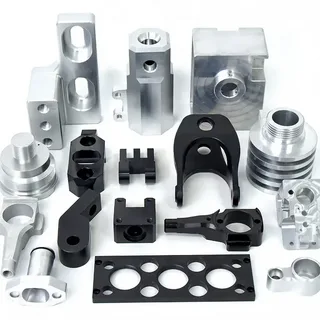
Manufacturing is undergoing a rapid transformation driven by automation, digitalization, and advanced engineering techniques. At the center of this evolution are precision CNC machined components, which are redefining how industries design, produce, and scale high-performance products. From aerospace to medical devices, these components are becoming the backbone of modern manufacturing systems.
As global demand for accuracy, speed, and efficiency continues to rise, CNC machining technology is expected to play an even greater role in shaping the future of industrial production. This article explores how precision CNC machining is influencing manufacturing and what lies ahead.
1. The Rise of Smart Manufacturing Systems
The integration of smart technologies into manufacturing is revolutionizing production lines. CNC machines are no longer standalone tools; they are now connected systems capable of real-time monitoring, automation, and data-driven decision-making. This evolution enhances the production of precision cnc machined components with higher consistency and reduced error rates.
Smart factories use IoT sensors and AI-powered analytics to optimize machining processes. This ensures that every component meets strict dimensional tolerances while minimizing waste and downtime.
Key points:
- CNC machines are now integrated with IoT and AI systems
- Real-time data improves machining accuracy and efficiency
- Reduced human intervention lowers production errors
- Predictive maintenance extends machine lifespan
- Smart systems enhance scalability of production
The shift toward smart manufacturing means companies can produce complex parts faster and more reliably than ever before. This is especially important for industries that depend on precision cnc machined components where even minor deviations can impact performance.
Additionally, automation reduces production costs over time, making advanced manufacturing more accessible to businesses of all sizes.
Unmatched Precision and Engineering Accuracy
One of the biggest advantages of CNC machining is its ability to achieve extremely tight tolerances. The future of manufacturing heavily relies on this capability, especially as industries demand more complex and miniaturized components. Precision cnc machined components are essential in sectors where accuracy is non-negotiable.
Modern CNC systems use multi-axis machining, advanced tooling, and computer-controlled precision to ensure flawless output. This level of control allows manufacturers to produce parts that meet exact engineering specifications consistently.
Key points:
- Multi-axis CNC machines enable complex geometries
- High repeatability ensures identical components in mass production
- Tight tolerances improve product reliability
- Reduced material waste increases efficiency
- Ideal for aerospace, automotive, and medical industries
As technology advances, CNC machines will become even more precise, capable of producing microscopic-level details. This will open new opportunities in nanotechnology and micro-engineering fields.
The growing demand for precision cnc machined components is pushing manufacturers to continuously improve accuracy standards and quality control systems.
Material Innovation and Versatility
The future of manufacturing is not just about machines—it is also about materials. CNC machining supports a wide range of materials, including metals, plastics, and advanced composites. This versatility makes it a key technology for producing precision cnc machined components across multiple industries.
New materials are being developed to enhance strength, heat resistance, and durability. CNC machines are evolving to handle these advanced materials efficiently without compromising precision.
Key points:
- Supports metals like aluminum, titanium, and stainless steel
- Compatible with high-performance plastics and composites
- Enables production of lightweight yet strong components
- Ideal for aerospace and electric vehicle industries
- Expands possibilities for custom engineering solutions
Material innovation is allowing manufacturers to design lighter, stronger, and more efficient products. CNC machining ensures these materials are shaped with extreme precision, maintaining structural integrity.
As industries push for sustainability, CNC machining also helps reduce waste by optimizing material usage during production.
Automation and the Future Workforce
Automation is reshaping the manufacturing workforce. While CNC machines reduce the need for manual labor, they increase demand for skilled operators, programmers, and engineers who can manage advanced systems. The production of precision cnc machined components is increasingly dependent on digital expertise.
Instead of replacing humans entirely, CNC technology is shifting human roles toward supervision, programming, and system optimization. This leads to more efficient production environments with fewer errors and higher output quality.
Key points:
- Increased demand for CNC programming skills
- Automation reduces repetitive manual tasks
- Operators focus on quality control and system management
- Collaboration between humans and machines improves productivity
- Training programs are evolving to meet industry needs
The future workforce will need to adapt to digital manufacturing environments. Educational institutions and industries are already investing in training programs to prepare workers for CNC-driven production systems.
This transformation ensures that precision cnc machined components continue to meet rising global standards while maintaining efficiency.
Sustainability and Efficient Production Practices
Sustainability is becoming a core priority in modern manufacturing. CNC machining contributes to this goal by reducing material waste, improving energy efficiency, and enabling more sustainable production cycles. The demand for precision cnc machined components is closely tied to eco-friendly manufacturing practices.
Advanced CNC systems optimize cutting paths and material usage, significantly lowering scrap rates. This makes manufacturing not only more cost-effective but also environmentally responsible.
Key points:
- Reduced material waste through optimized machining paths
- Energy-efficient CNC machines lower power consumption
- Improved production accuracy reduces rework and scrap
- Supports sustainable manufacturing initiatives
- Enables lifecycle optimization of components
Manufacturers are increasingly adopting green technologies alongside CNC systems to minimize environmental impact. This includes using recyclable materials and energy-efficient machinery.
As global regulations tighten, sustainability will become a major factor in manufacturing decisions, making precision cnc machined components even more important in eco-conscious industries.
Conclusion
The future of manufacturing is being shaped by innovation, automation, and precision engineering. At the heart of this transformation are precision cnc machined components, which enable industries to achieve higher levels of accuracy, efficiency, and scalability than ever before.
From smart factories and material innovation to automation and sustainability, CNC machining is driving a new era of industrial excellence. As technology continues to evolve, manufacturers who invest in advanced CNC systems will gain a competitive advantage in producing high-quality, reliable, and sustainable products.
Ultimately, precision CNC machining is not just a manufacturing method—it is the foundation of the future industrial landscape.