
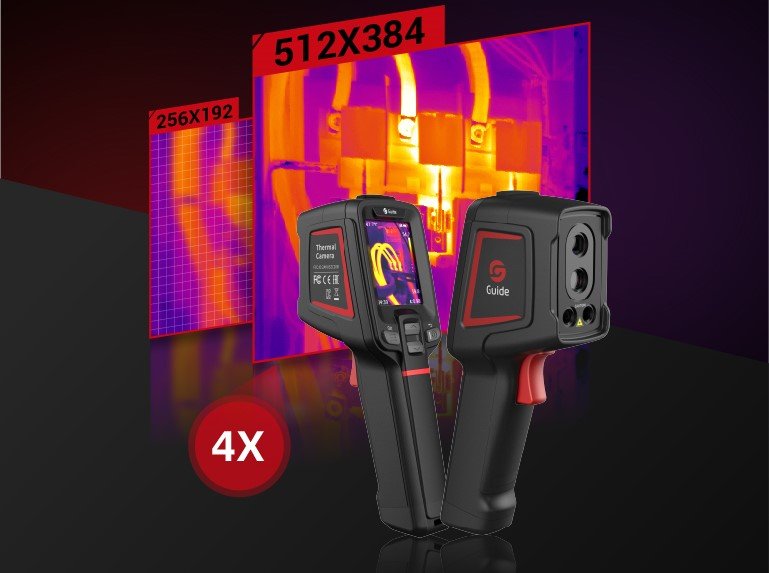
In the rapidly evolving landscape of 2026, the industrial sector has reached a turning point. As organizations pivot toward Industry 4.0, the role of predictive maintenance has shifted from a peripheral task to the very heart of operational strategy. The ability to monitor equipment health without interrupting production is no longer just an advantage—it is a requirement for maintaining a competitive edge in global markets. By integrating high-precision infrared diagnostics into their daily routines, facility managers can now detect subtle thermal anomalies that signal impending mechanical or electrical failure, preventing costly downtime and ensuring a safer workplace for their staff. Partnering with a reliable tool-like thermal camera supplier is the first step in this digital transformation, providing the hardware necessary to turn invisible heat signatures into clear, actionable intelligence.
The Era of Intelligent Predictive Maintenance
The current state of infrared technology is far removed from the simple heat-sensing devices of the past. By 2026, thermal cameras have become intelligent nodes within the industrial Internet of Things (IIoT). These systems no longer just display heat maps; they provide advanced analytical data that integrates with 5G connectivity and edge-based AI models. When a camera identifies an overheating bearing or a deteriorating electrical connection, it doesn’t just alert the operator—it can trigger automated diagnostic reports and initiate maintenance work orders. This evolution in predictive maintenance reduces enterprise downtime by an estimated 15–20%, enabling companies to recoup their initial technology investment in as little as six months.
Portability for Agile Field Teams
Field inspections in high-density industrial environments require tools that prioritize both performance and mobility. The industry has seen a massive surge in the adoption of the custom pocket thermal camera, a device that has redefined the daily workflow for site technicians. Unlike traditional, cumbersome imaging systems, these pocket-sized units allow for rapid, spontaneous spot checks of critical assets. This portability is the key to creating a proactive maintenance culture. When a tool is easy to carry, inspections happen more frequently, and small issues—like a slight temperature increase in a pump or an abnormal friction pattern in a conveyor assembly—are caught long before they escalate into structural failures.
Precision and Clarity: The 256×192 Advantage
For professional-grade diagnostic work, resolution is a critical factor in performance. A 256×192 intelligent thermal camera has emerged as the definitive choice for maintenance teams looking to balance cost, portability, and imaging clarity. This specific resolution offers a high-fidelity look at electrical panels, piping systems, and mechanical drives, providing enough detail to distinguish between a minor component temperature rise and a critical failure warning. The «intelligent» capabilities inherent in these devices—such as automatic emissivity correction and real-time data logging—empower technicians to make quick, data-driven decisions on the factory floor. The ability to resolve small thermal anomalies with high accuracy has been shown to reduce false negatives in industrial inspections by as much as 40%, ensuring that maintenance efforts are directed exactly where they are needed most.
Safety and Operational Excellence
Employee safety remains the fundamental priority of all industrial operations. Thermal imaging serves as a critical safety buffer, allowing maintenance crews to perform rigorous inspections of high-voltage switchgear and rotating machinery from a secure, non-contact distance. By removing the need for physical interaction with hazardous areas, organizations significantly lower the risk of electrical arcs, heat-related injuries, and other workplace accidents. This safety-first approach extends beyond immediate protection; it also drives long-term operational excellence. By identifying the root causes of thermal issues—such as poor lubrication, misalignment, or insulation gaps—teams can extend the operational life of their assets, ensuring that machinery runs efficiently for years beyond its expected service cycle.
Data Integration and the Digital Transformation
In 2026, the true value of an infrared image is found in its integration with digital maintenance management systems. Leading-edge cameras are now designed to sync instantly with mobile applications and cloud platforms, creating a digitized audit trail of every inspection. This workflow allows engineering teams to track thermal «trends» over time, providing a comprehensive historical baseline for every asset in the facility. By comparing current performance against established healthy baselines, organizations can predict the remaining service life of components with remarkable accuracy. This data-driven strategy not only optimizes spare-parts inventory and maintenance scheduling but also ensures full compliance with evolving industry safety standards like NFPA 70B.
Building a Future-Ready Maintenance Strategy
As industrial environments continue to adopt automated systems, the role of thermal imaging will only grow more significant. The future of maintenance lies in the seamless convergence of human expertise and machine intelligence. By investing in scalable, high-resolution diagnostic platforms today, forward-thinking organizations are positioning themselves to handle the complexities of future industrial operations. Whether through routine manual inspections with portable units or the deployment of automated, AI-driven monitoring, the commitment to precise infrared diagnostics is the hallmark of a resilient, productive, and technologically superior operation. This is more than a tool upgrade; it is a fundamental shift toward an infrastructure that is safer, smarter, and inherently more reliable.