
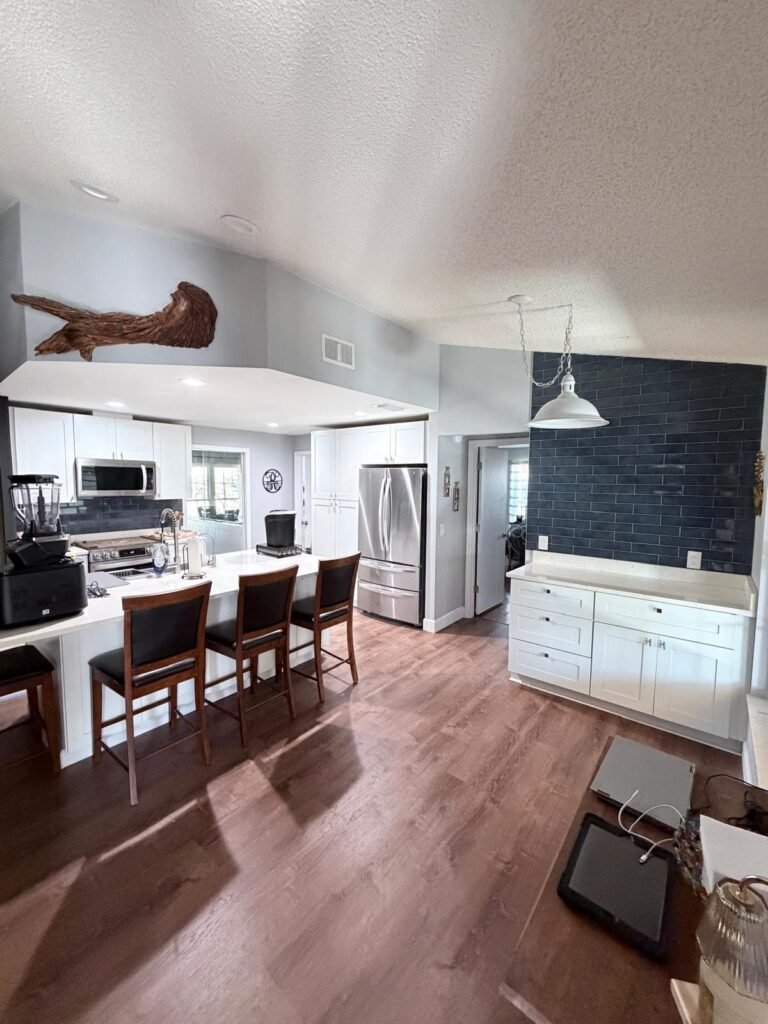
Why Lighting Matters More Than Ever
Living rooms have evolved into multifunctional spaces. They’re used for relaxing, entertaining, working, and sometimes even dining. That means lighting needs to adapt throughout the day.
Good Lighting Improves
- Comfort and atmosphere
- Visual balance within the room
- Functionality for different activities
- The way colors and materials appear
The trend now is less about brightness alone and more about flexibility and depth.
Layered Lighting Is Leading the Way
One of the strongest trends in living room design is layered lighting.
Instead of relying on a single overhead source, modern spaces combine multiple types of lighting.
The Three Essential Layers
- Ambient lighting for overall illumination
- Task lighting for reading or focused activities
- Accent lighting for depth and visual interest
When these layers work together, the room feels balanced rather than flat.
Recessed Lighting with a Softer Approach
Recessed lights remain popular, but the way they’re used has changed.
What’s Different Now
Instead of flooding the ceiling with evenly spaced lights, designers are using fewer fixtures more strategically.
This creates:
- Softer illumination
- Less glare
- A more relaxed atmosphere
Practical Observation
One common mistake I see is overlighting the living room. Too many recessed fixtures can make the space feel clinical rather than comfortable.
Less is often more.
Statement Fixtures That Feel Intentional
Pendant lights and sculptural fixtures are becoming focal points in living rooms.
Popular Choices
- Oversized pendants
- Minimalist chandeliers
- Organic or textured materials
These fixtures work best when they complement the room instead of dominating it.
A statement piece should draw attention naturally—not compete with everything else in the space.
Warm Lighting Is Replacing Cool Tones
Cool white lighting is gradually being replaced by warmer tones.
Why Warm Light Works Better
- Creates a more inviting atmosphere
- Enhances natural materials like wood and stone
- Feels softer during evening hours
This shift has made living rooms feel more relaxed and livable overall.
Insider Tips from Real Renovation Projects
Tip 1: Use Dimmers Everywhere Possible
Dimmers provide flexibility that standard switches can’t.
The same living room may need bright lighting during the day and softer lighting in the evening. Dimmers allow the room to adapt without changing fixtures.
Tip 2: Think About Shadows, Not Just Brightness
Lighting isn’t only about illuminating surfaces—it’s also about creating depth.
Strategic shadows can make a room feel warmer and more layered. Completely eliminating shadows often results in a flat-looking space.
Floor and Table Lamps Are Making a Strong Return
Portable lighting is becoming more important again, especially in renovated homes.
Why They’re Trending
- They add flexibility without rewiring
- They create softer pools of light
- They make large rooms feel more intimate
Floor lamps are especially useful for defining corners or reading areas.
Cove and Indirect Lighting
Indirect lighting is one of the more subtle trends gaining popularity.
Common Applications
- Ceiling coves
- Backlit shelving
- Hidden LED strips
This type of lighting creates atmosphere without exposing the light source itself.
The effect is clean, modern, and less harsh on the eyes.
Lighting and Material Interaction
Lighting doesn’t exist independently—it changes how materials appear.
Examples
- Matte finishes absorb light softly
- Glossy surfaces reflect brightness more intensely
- Textured walls create subtle shadow variation
This interaction becomes especially important in renovated living rooms with layered materials.
For example, as explained in this guide on waterproof flooring plant city, flooring texture and finish can influence how light travels through a room, affecting the overall atmosphere more than many homeowners expect.
Natural Light Still Matters Most
Artificial lighting trends are important, but natural light remains the foundation of good living room design.
Ways to Improve Natural Light
- Use lighter window treatments
- Position mirrors strategically
- Avoid blocking windows with oversized furniture
Even the best lighting plan works better when supported by daylight.
A Common Design Mistake
One issue I’ve noticed repeatedly is selecting fixtures before planning the furniture layout.
This often results in lights being slightly off-center or poorly aligned with how the room is actually used.
Lighting placement should always relate to the layout, not just the ceiling.
Mixed Material Fixtures
Modern lighting fixtures increasingly combine different materials.
Popular Combinations
- Metal with glass
- Wood with matte finishes
- Stone accents paired with soft lighting
These combinations help fixtures feel integrated into the overall design rather than isolated decorative pieces.
Smart Lighting Without Overcomplication
Smart lighting systems are becoming more common, but homeowners are using them more subtly now.
Practical Uses
- Adjustable brightness presets
- Zoned lighting control
- Automated evening settings
The focus has shifted toward convenience rather than novelty.
Real-Life Example: Simplicity Changed the Entire Room
In one renovation project, the homeowners initially installed multiple bright ceiling fixtures across the living room.
Despite expensive furniture and finishes, the room felt uncomfortable and overly exposed.
We simplified the setup by:
- Reducing overhead lighting
- Adding floor lamps
- Introducing warm indirect lighting
The room immediately felt calmer and more balanced.
Interestingly, nothing else in the space changed.
Balancing Style and Function
Lighting trends work best when they support the room’s function.
A beautiful fixture that creates glare or poor visibility quickly becomes frustrating.
Questions Worth Asking
- How will the room be used most often?
- Does the lighting feel comfortable at night?
- Are different lighting layers working together?
These practical considerations matter just as much as appearance.
Bringing It All Together
Modern living room lighting trends are moving toward softer, more intentional design.
The emphasis is now on:
- Layered illumination
- Warm tones
- Flexible control
- Visual comfort
rather than simply making a room brighter.
Final Thoughts
Lighting design has become one of the defining elements of a successful living room renovation. It shapes how a space feels, functions, and even how large it appears.
The best lighting plans are rarely the most complicated. They’re the ones that feel natural, adaptable, and connected to the way people actually live.