
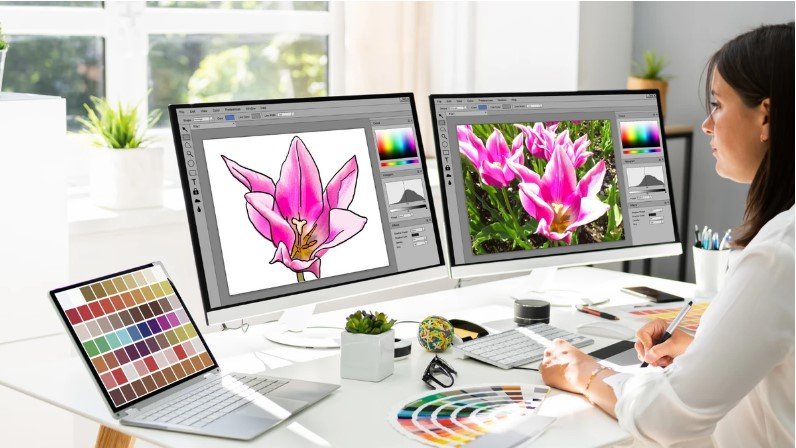
Print design looks simple from the outside. But when you go deep, it needs care and planning. A small mistake can change the whole result. That is why smooth and clean print work is important.
Many people start with normal images. But those images often do not print well. That is when people move toward proper design setup like Vector Art For Printing to get sharp and scalable results.
When your design is ready the right way, printing becomes easy. The colors look clear. The lines stay sharp. And the final result looks professional.
Why Print Design Quality Matters
Print quality is more than just a picture.
It affects:
- Brand image
- Customer trust
- Product value
A bad print can make a good design look weak.
My First Experience with Print Designs
When I first worked with print files, I used low-quality images. I thought they were good enough.
But the results were not good.
I saw:
- Blurry edges
- Faded colors
- Broken lines
Later, I learned that print design needs proper setup. Experts at Digitizing Buddy helped me understand how clean design files improve print output.
What Makes a Print Design Professional
A professional print design has:
- Clean lines
- Sharp edges
- Balanced colors
- Scalable quality
These things make it look good on any material.
Importance of Clean Artwork
Clean artwork is the base of good printing.
Why It Matters:
- Removes noise
- Improves clarity
- Helps printers read design
Dirty or messy artwork leads to bad prints.
Why File Type Matters in Printing
Different file types give different results.
Raster Files
- Made of pixels
- Can become blurry
Vector Files
- Made of paths
- Stay sharp at any size
Vector files are better for printing.
Understanding Resolution in Print Design
Resolution controls image sharpness.
Low Resolution
Problem:
Blurry print.
High Resolution
Result:
Clear and sharp output.
Always use high resolution for print work.
Color Mode for Printing
Color mode is very important.
RGB Mode
- Used for screens
- Not ideal for print
CMYK Mode
- Used for printing
- Gives accurate colors
Always convert design to CMYK before printing.
Why Scaling Matters in Print Design
Scaling means resizing the design.
Poor Scaling
- Blurry edges
- Pixel break
Good Scaling
- Clean and sharp lines
- No quality loss
Vector files handle scaling best.
Common Mistakes in Print Design
Using Low-Quality Images
Leads to blurry prints.
Ignoring Color Mode
Colors look wrong.
Wrong File Format
Printer may not read file.
Not Testing Print
Leads to surprises.
How Experts Prepare Print Designs
Experts follow a clear process.
Step 1: Check Artwork
Clean and adjust design.
Step 2: Convert Format
Turn image into vector if needed.
Step 3: Set Color Mode
Use CMYK for print.
Step 4: Adjust Resolution
Ensure high DPI.
Step 5: Test Output
Print sample before final run.
This process gives better results.
Role of Vector Files in Printing
Vector files are very important.
Benefits:
- No pixel loss
- Easy scaling
- Clean edges
That is why professionals prefer vector format.
Why Print Size Matters
Size affects quality.
Small Prints
Need less detail.
Large Prints
Need high-quality setup.
Poor setup shows more errors in large prints.
Importance of Fonts in Print Design
Fonts must be clear.
Thin Fonts
May break in print.
Bold Fonts
Print better.
Always choose readable fonts.
Why Testing Print Is Important
Testing saves time and money.
Benefits:
- Checks color accuracy
- Finds design errors
- Improves final output
Never skip testing.
How Good Design Improves Branding
Clean print design builds trust.
Professional Look
Attracts customers.
Strong Identity
Makes brand memorable.
Consistency
Same look everywhere.
Tools Used in Print Design
Design Software
Helps create artwork.
Vector Tools
Convert images into clean shapes.
Preview Tools
Show final look.
These tools improve quality.
Why Beginners Face Print Issues
Beginners often:
- Use wrong file types
- Ignore resolution
- Skip color settings
This leads to poor prints.
How Professionals Avoid Print Problems
Experts always:
- Use vector files
- Set proper color mode
- Test before printing
This ensures clean results.
EEAT in Print Design Work
Good print design follows strong principles.
Experience
Real work with printing.
Expertise
Knowledge of design rules.
Authority
Reliable methods.
Trustworthiness
Consistent results.
These values make designs dependable.
Tips for Smooth Print Designs
Always Use High Resolution
Keeps design sharp.
Use Vector Format
Prevents pixel loss.
Set CMYK Mode
Ensures correct colors.
Test Print First
Avoid final errors.
Keep Design Simple
Simple designs print better.
Why Clean Design Saves Money
Bad design causes:
- Reprints
- Wasted material
- Time loss
Good design avoids these problems.
Why Businesses Trust Experts
Businesses need perfect print output.
That is why many rely on Digitizing Buddy for clean and professional print-ready designs.
How Print Design Affects Machine Output
Good design helps machines:
- Print faster
- Reduce errors
- Improve accuracy
Final Thoughts
Smooth and professional print designs are not accidental. They come from proper planning and clean setup.
When you use the right file type, correct colors, and high resolution, your print results improve a lot.
With expert help from Digitizing Buddy, you can turn any artwork into a clean, sharp, and print-ready design that looks professional every time.